Education and National Security

Two perspectives on national security stand out to me.

  • Readiness to defend – military preparedness to do battle
  • Preventative measures to avoid conflict – building trust and cooperation globally.

For those who address our national security from the perspective of readiness to defend, we are weak and vulnerable. Mission Readiness describes itself as a “nonpartisan national security organization of senior retired military leaders calling for smart investments in America’s children.” They released a report titled, Still To Fat To Fight, and share the following on their website:

Currently, 75 percent of 17- to 24-year olds in the U.S. cannot serve in the military, primarily because they are too poorly educated, too overweight, or have a serious criminal record.  A quarter of young Americans do not graduate on time from high school, a minimum requirement to be eligible for military service. Even among our nation’s high school graduates, nearly one in four seeking to enlist cannot join the Army because of low scores on the military’s basic exam for math, literacy, and problem-solving. 

Two young children running a race.

We can address physical and intellectual fitness by sharing and replicating outstanding models that are creating the desired results among ourselves. These solution models need to become common practice that is sustained – for youth nationwide. We have models for physical fitness, and we have models for nutrition that are comprehensive and well-conceived. Research on the effects of service learning have shown that student engagement in academics increases, providing the link with relevance our youth need. Ethical fitness becomes embedded in a curriculum that joins all youth in working with the non-profits in their community, engaging with their sister-city peers, and bringing environmental solutions to their communities. Accomplishing large scope common good becomes a consistent focus in their education.

Building humanitarian relations best begins among youth globally. Their collective altruistic qualities will head us in a better direction. As adults, we continue to drop the ball, we continue to find impasse instead of cooperation. Not so for our youth or our social entrepreneurs. It’s time to join youth with outstanding social entrepreneurs to create the outcomes that elude adults. It’s time for adults to yield and learn from these populations.

A painting of a young boy and girl holding hands walking away down a highway in a desert setting. Clouds in front of them have the continents outlined within.

Consider the impact of every school district adopting a sister city in a developing part of the world. The sister city component of the K-12 service initiative would provide our youth with a checklist of global projects created by global social entrepreneurs; it would create sustained relationships between youth in developed nations and youth in developing areas of the world – youth growing together in solution making. What would the outcome be a generation later when these youth come together to problem solve as adults?

National security is one of many issues that a K-12 service learning initiative would address. The initiative refracts with light as through a prism into many needful issues and areas of need. The initiative will bring us to another era – one of sustainable peace, progress, and prosperity.

Let’s Fix Food Insecurity

“An estimated 100 billion pounds of food, enough to totally eliminate hunger, is thrown away annually in the United States. It does not have to be this way.” AmpleHarvest.org

It’s nothing short of amazing that we continue to allow this contrast to exist without correction. We have the supplies, tools, and intelligence to fix this issue, but we don’t. At what point do we ask ourselves as the adults in charge, “How is this educating our youth?”

At home we role model for our youth – watching our behaviors and choices. At best, in the realm of food insecurity, we volunteer with our youth to model giving and care for others. We have yet to step back and realize that we are educating them to allow the unconscionable to exist among ourselves – in each and every community – to allow others to remain hungry – while we periodically apply a temporary patch to the problem. We should be collectively embarrassed and apologize to our youth for this ongoing gross error on our part.

Food bank shelves with just some jars of peanut butte and jelly and empty shelves.

As adults, we are preoccupied. We continue to focus on problem solving as we always have. We form the same committees with the same charges, asking the same questions, creating the same reports. Our adult mass stands in the way of progress as we continue to accept minor, temporary improvements for basic survival needs. And we have the audacity to evaluate the academic progress of our youth while we make very little progress at the national level.

Let’s fix food. It’s easy. It’s inspiring. We need to coordinate – not as we do at present, but from the bottom up with our children. We can combine the best models to create a system of solution that is known nationwide; a system operating in every community; something we all know and understand.

image

Given tools and opportunity, our youth, with their teachers and parents would create a lasting system of solution. Youth need to become part of the overall system of change. They need practice in creating, assessing, and sustaining these systems. Youth will reorient our thinking and teach us a better way – a way that is possible. Our youth need to engage in their communities. Our youth need to feel the altruistic side of their nature converge with the goals of education. Youth need to see the match between the problems they see in the world and the goals of education.

Food is an easy place to start. Let’s demonstrate our capabilities, track our outcomes, and fix this. Once we see how we can come together – how our youth can lead the way – we will see how we can approach other areas. We can rediscover the largess of our compassion and the strength of our intelligence to create outstanding progress.

An Antidote to Bullying

Bullying that escalates to violence doesn’t cross the path of all our children. Violence sits at the extreme end of a spectrum of shades of insensitivity to others. Violence is the end result of an infection in full bloom, requiring coordinated efforts to change its course.  From a preventative perspective, we need to grow an environment in which the shades of bullying cannot find fuel to grow.

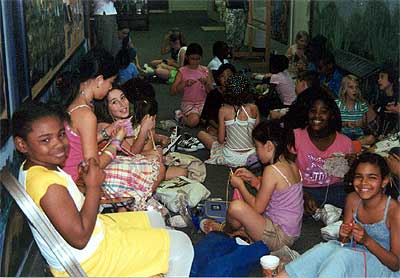
Large group of elementary students knitting together. They are smiling, sitting on the floor of a school hallway.

What if, in addition to programs that address end-result outcomes of violence, we were to approach the early years of education with community building activities that promoted inclusion and friendship among our youth? What if we were to consider a simple, low cost activity that can actually accomplish this outcome, with additional positive benefits?  There are community members who have discovered that knitting groups create an inclusive community experience that enriches and strengthens academic performance:

Elementary school program:

  • Students as young as six participate
  • Students make friendships and mentor their peers
  • Inter-generational relationships are created
  • Skills learned:
    • Persistence
    • Concentration
    • Follow-through and mastery
    • Improvement in fine-motor skills and hand-eye coordination.

Middle school program for at-risk students:

  • Caring, one-on-one relationships develop between adults and youth
  • Afghan squares for donation to charities are often first projects
  • Promotes:
    • Problem solving
    • Critical thinking
    • Creativity
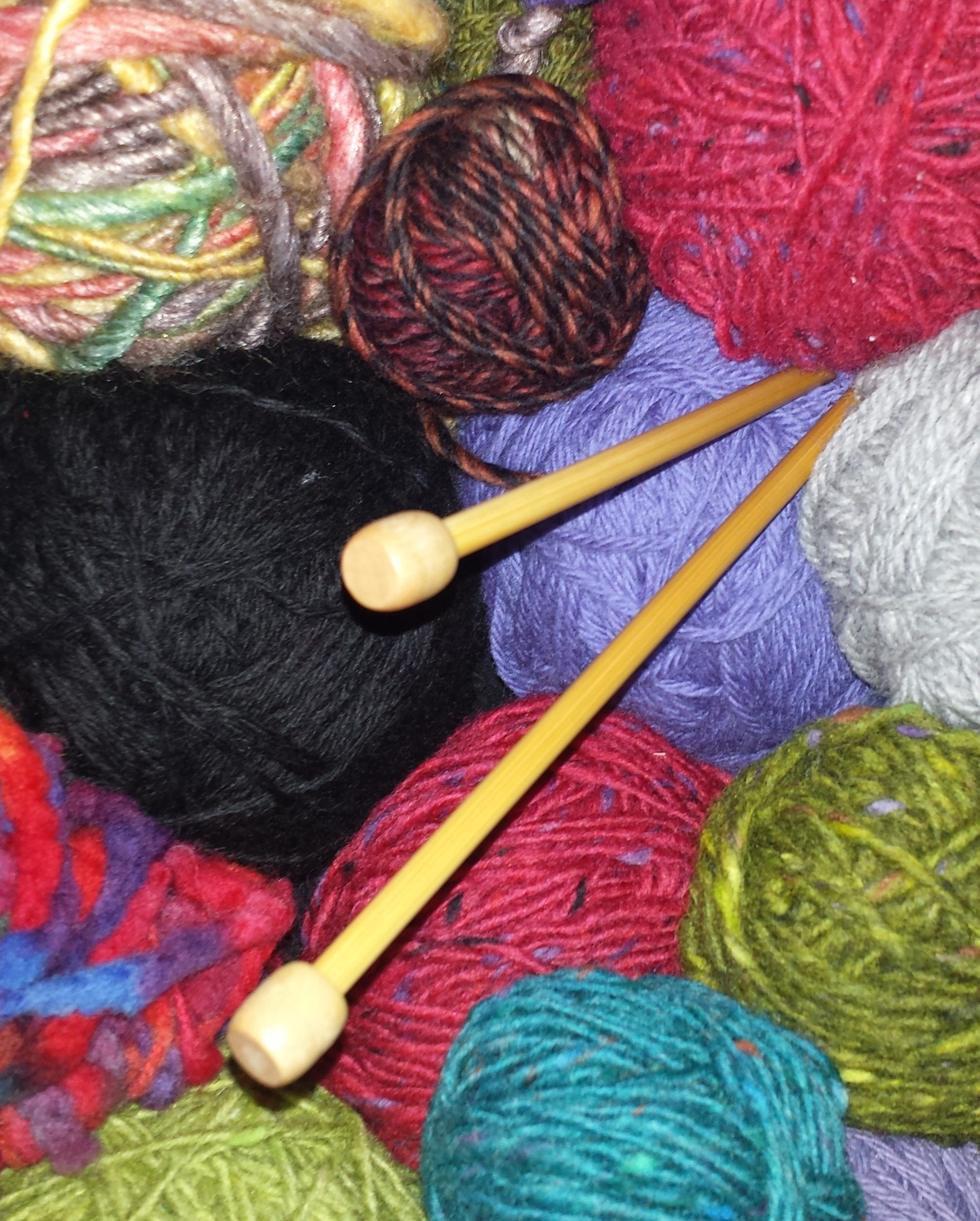
Yarns and knitting needles.

The two programs above come from New Jersey and Oregon – community members working the same territory, finding the same results. We can learn from them and adopt these programs with youth nationwide. Outstanding projects that are creating the results we need can be brought to all of our youth, not just a few school systems where these projects originate.

A community member in upstate New York shared this example:

Years ago I taught a blind girl (2nd grader) and her mom how to knit.  The daughter went crazy knitting scarfs.  She used pencils, and anything with a point.  Her classmates started to take an interest in her after.  She had been treated poorly by many of them because of her “difference”. The teacher and her mother put together a program where the blind girl began to teach her sighted classmates how to knit.  The mother taught the other mothers… The community of caring grew from those knitting needles, friendships formed, and a little girl felt community for the first time!

Knitting is one example of a solution we have created. There is so much we can build – with existing resources – with low cost, available resources – that will grow an underpinning beneath the violent outcomes at the forefront of our problem solving. We can work from both ends of this equation to create a result that will not only address a widespread infection but replace it with a strong, healthy, sustainable, growth pattern that will spawn more of the good stuff we are capable of creating together as a people.

Of the People, By the People, For the People

Americans have always been a forward thinking and innovative people. Our consideration of “the people,” which defined our uniqueness, can expand to include our children—those among us who remind us of purity of purpose—regenerating our potential as a people.

A national K-12 service initiative makes sense to the average citizen, is immediately actionable, embraces existing systems of support, has short- and long-term outcomes, and is sustainable for the long haul worldwide. It identifies outstanding projects, honors project originators, and incorporates ongoing input from teachers, students, and community organizations. It gives people something practical to do in their communities that unities them with others nationally and globally, reviving the American spirit and awakening the true sense of community with our children at the helm. Our children are eager for inclusion in real-life problem solving and can work with us now to make the world more peaceable and productive for all.

This K-12 initiative will surpass anything we have created thus far, providing a legacy for our children globally, and creating significantly different outcomes than we presently experience. The model builds an infrastructure of civic engagement at home, as well as abroad, rooting the positive outcomes of widespread service activity as the norm. The adults of today are not prepared to address the challenges we face, but our children can become prepared.

With shared values, common areas of problem solving, and ingenuity that is uniquely American, we can rediscover the heartbeat of our nation, coming together to embrace those in need, and, for the first time, including the youngest Americans.