
Although I sought opportunities as a first time parent to inculcate giving in my daughter Genevieve, my second round of parenting, sixteen years later, afforded a more relaxed context of mothering and more life experience from which I was able to see more paths to instill awareness of societal need and responsibility for contribution.
One of these paths utilized the often annoying deluge of donation requests one receives in the mail from a variety of non-profits. Although the efforts of these non-profits are critical to the valuable problem solving they bring to the world, the onslaught of requests can be overwhelming for the individual. I don’t think i am alone in feeling some measure of guilt in turning from many due to lack of resources, and even some negativity toward them when they arrive as a defense mechanism.
When we are in the midst of rearing children, these requests for help can take on even more significance, as we find ourselves immersed in teaching values and explaining why we do or don’t do things in a variety of contexts. During this early parenting time I decided to bring these requests to the attention of Charlotte and ask her to work with me to categorize them. I offered her the amount of $20 a month as a working budget from our monthly budget. As she made decisions I would sign checks and fill out the rest of the information needed on the checks. She would address and stuff the envelopes and then send them from the post office.
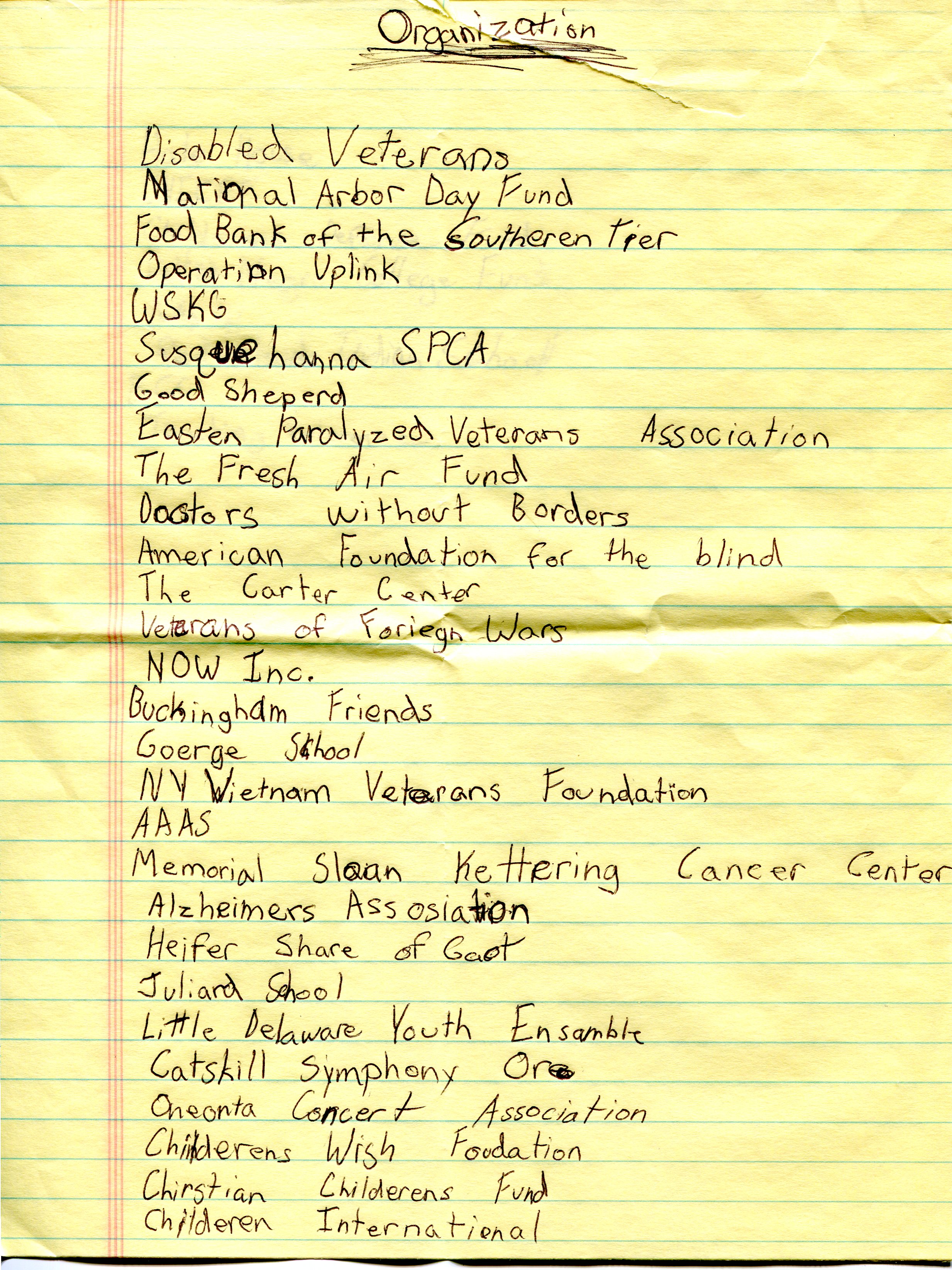
She made lists of these organizations:
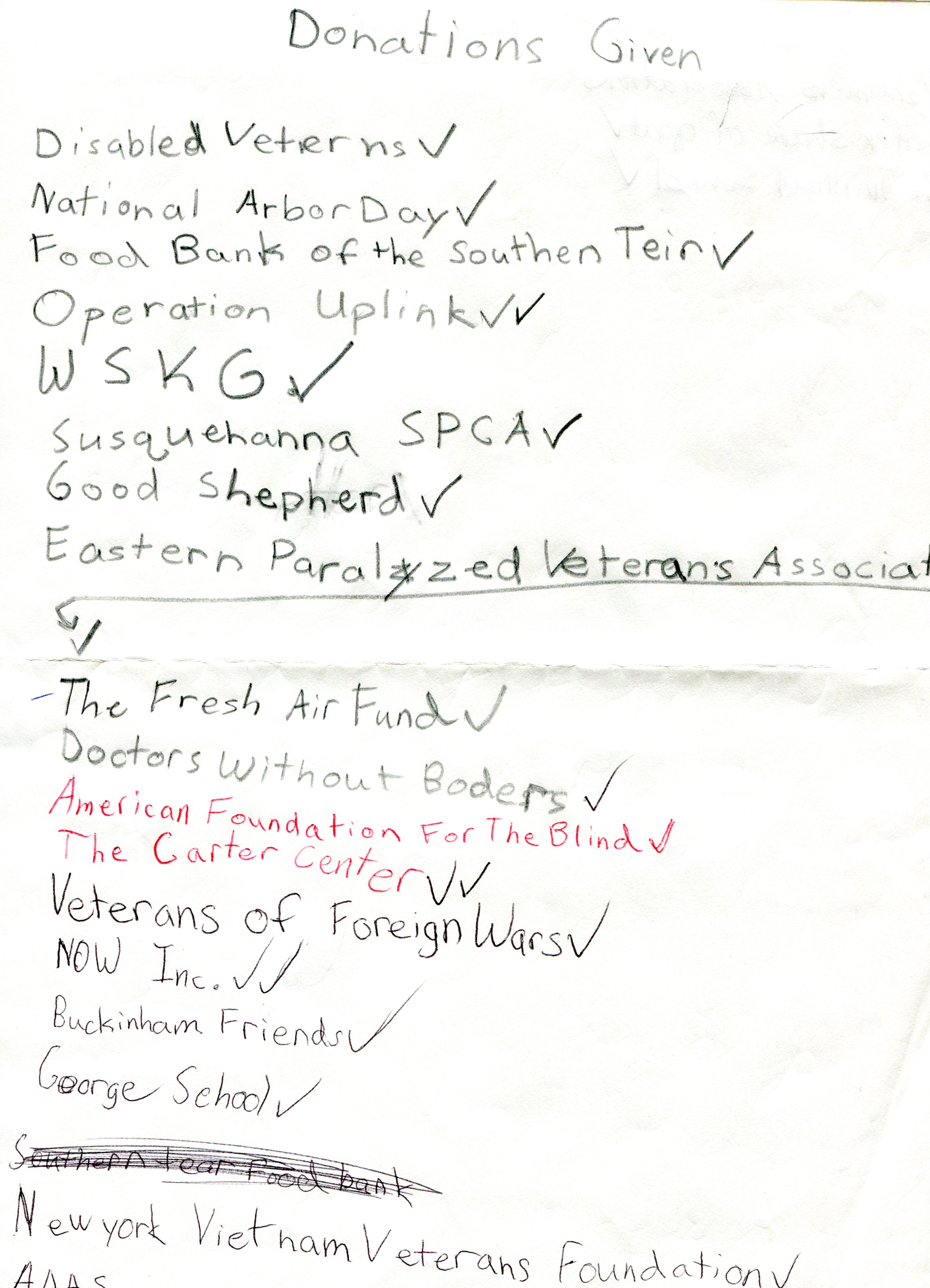
And more lists of organizations we had given to:
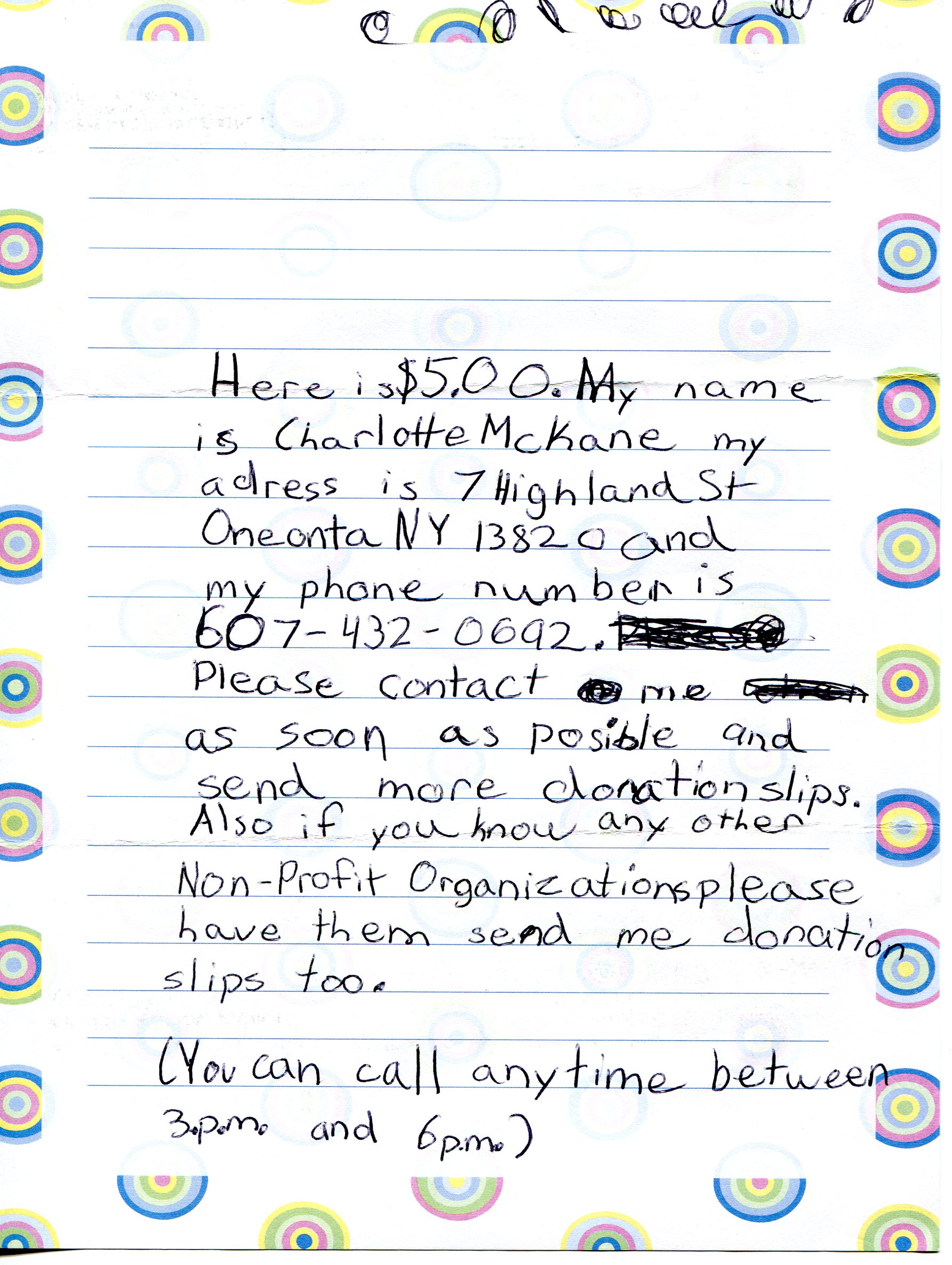
We made a folder for requests that arrived in the mail to organize them by topic. She became inspired by thank you letters that arrived and she wanted to respond:
The process afforded us opportunities to work on organizational thinking, writing, and aspects of the adult world and problem-solving areas represented by these organizations. As she grew she began to choose specific areas of support…saving for an ark for Heifer, then global outreach through Kiva options, environmental organizations, and the education of women in developing global locations.
The incorporation of this element in her life provided opportunity for inclusion in our family finances, to be in charge of a decision making area for the family, and was sustained until she left for college; it was a constant that integrated growth from formal schooling and self-motivated education in which she engaged beyond school. I think that experiences like this helped to fuel her interest in the so-called adult world and pursuing self-directed education.
 A National Service Initiative - Starting in Kindergarten